After 18 years building and installing landscapes throughout Osoyoos and Oliver, we've seen the same mistakes repeated countless times. What works beautifully in Vancouver or Kelowna often fails spectacularly in the South Okanagan's extreme climate. Homeowners invest thousands in landscaping only to watch plants die, irrigation systems fail, and water bills skyrocket within the first season. The good news? These problems are entirely preventable with regional knowledge. Here are the five most common landscaping mistakes we see in the South Okanagan—and how to avoid them.
Mistake #1: Choosing Plants That Can't Handle Our Climate Extremes
The Problem
Homeowners fall in love with plants at big-box garden centers without checking if they're suited to South Okanagan conditions. We see thirsty lawns, English boxwood (winter burn), Japanese maples (sunscald and wind damage), and hostas (fry in our sun) fail year after year. The South Okanagan has some of Canada's most extreme climate swings: hot summer days, cold winter nights, low summer humidity, persistent winds, and intense UV radiation. Plants need to handle ALL of these stresses simultaneously.
The Solution
Choose quality sod and plant material appropriate for local conditions: Pick sod and plants suited to South Okanagan conditions and current local availability. If a plant isn't stocked locally, there's usually a good reason.
Research hardiness AND heat tolerance: A hardiness-zone rating isn't enough—plants need heat tolerance too. Look for native BC plants, Mediterranean species, and Central Asian steppe plants.
Avoid these failures: Water-hungry lawns, English boxwood, rhododendrons
Conditional plants: Japanese maples work in partial shade — avoid full western sun exposure. Hostas thrive in shaded areas only.
Plant instead: Quality sod suited to local conditions, along with potentilla shrubs, lavender/yarrow/penstemon perennials, sedum groundcovers, flowering plum or skyrocket juniper for vertical interest
Mistake #2: Installing Irrigation Without Understanding Water Restrictions
The Problem
Homeowners design irrigation for "ideal" conditions without accounting for restrictions. Osoyoos and Oliver watering restrictions can change by season, year, and drought stage, so irrigation systems should be flexible enough to follow the regulations currently in effect. When watering is limited to certain days and morning-only windows, a system that wasn't planned for those limits can't deliver adequate water — lawns end up short-changed.
The Solution
Design for restrictions from day one: Make sure total runtime fits within limited morning windows. Use drip irrigation for beds — it's more efficient than sprinklers. A smart weather-based controller can be a good option for some homeowners, while a properly programmed standard timer is completely appropriate for many others. Separate high-water zones from low-water zones.
Upgrade existing systems: Replace spray heads with drip in beds to cut runtime. Combine zones to reduce cycle time. Upgrade to efficient rotor heads for lawns. Recalibrate your controller programming to match current restrictions.
Mistake #3: Ignoring Soil Conditions
The Problem
South Okanagan soil is sandy loam with high pH (7.5-8.5) and low organic matter (1-2%). Water drains through quickly, nutrients leach out rapidly, alkaline pH makes nutrients unavailable, poor water retention. Homeowners plant into native soil without amendment, then wonder why plants struggle.
The Solution
Amend soil BEFORE planting:
- For beds/gardens: Work quality compost into the native soil to improve water and nutrient retention
- For individual plantings: Blend compost into the backfill, adding coarse sand where drainage needs improving
- For lawns: Topdress with compost annually in spring
The right amount and mix depends on your soil and what you're planting.
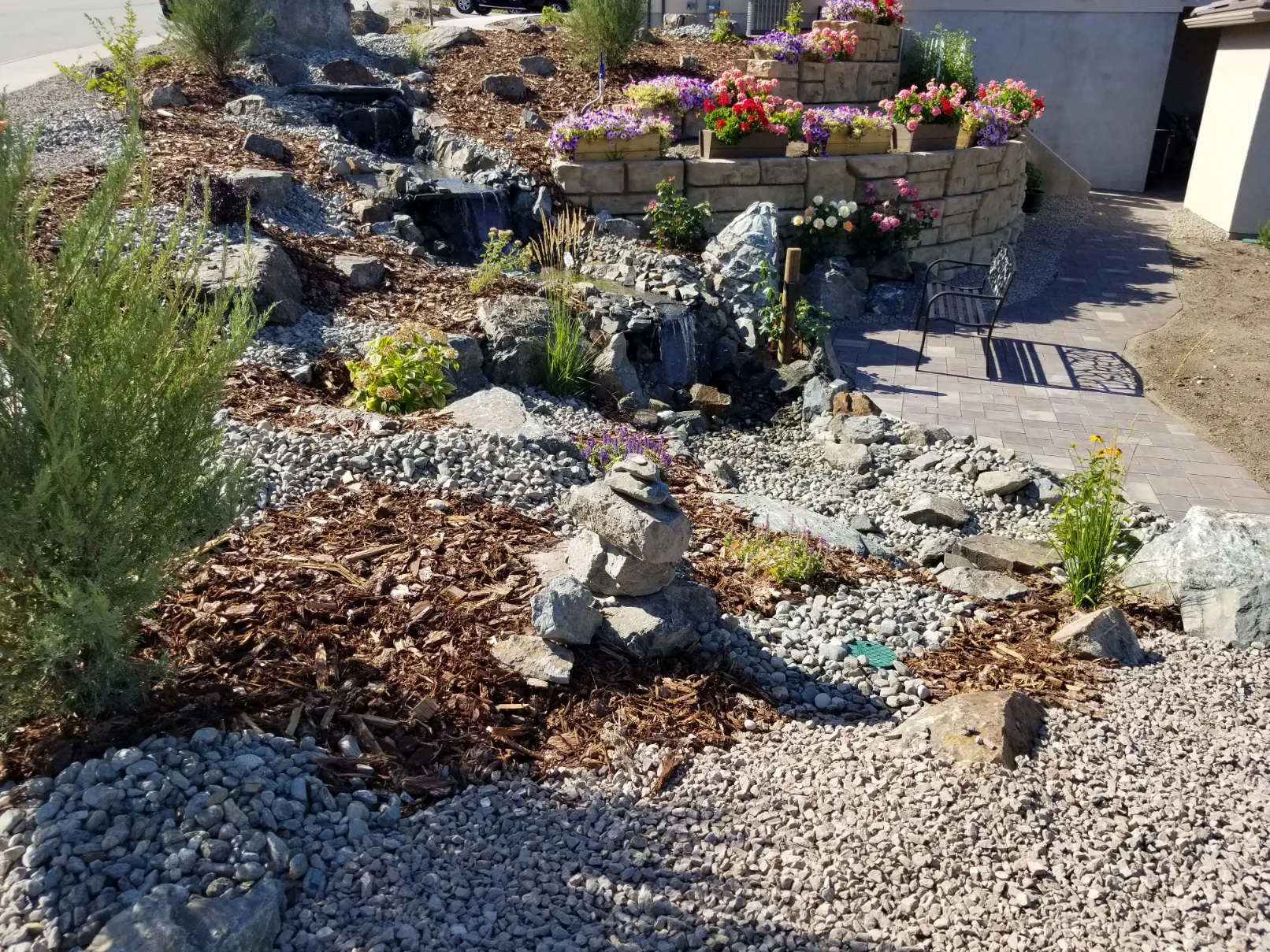
Ongoing improvement: Use decorative rock as ground cover in low-water planting beds. Add compost annually to garden beds. Leave grass clippings on lawn. Use organic fertilizers.
Mistake #4: Underestimating Wind Exposure
The Problem
Osoyoos and Oliver experience persistent winds (20-30 km/h sustained, 40-50 km/h gusts) especially March-May and winter chinooks. Wind causes rapid moisture loss (doubles water requirements), physical damage, winter desiccation of evergreens, reduced irrigation effectiveness, and difficulty establishing new plantings. Homeowners plant without wind protection, plants suffer or die.
The Solution
Assess wind patterns: Observe which areas get persistent wind (usually north/west exposures). Note where plants show wind damage.
Design with wind in mind: Create windbreaks with wind-tolerant shrubs/trees (caragana, Russian olive, skyrocket juniper). Use 50% open fences (not solid — creates turbulence). Choose wind-tolerant plants for exposed areas (ornamental grasses, potentilla, lavender). Stake new trees properly. Protect evergreens with burlap screens and anti-desiccant spray.
Adjust irrigation: Use drip instead of sprinklers in windy areas. Water early morning when winds are calmer.
Mistake #5: Skipping Professional Irrigation Winterization
The Problem
Winter nights drop to -10°C to -12°C regularly. Water left in irrigation lines expands when frozen, cracking fittings, splitting pipes, destroying valves. Spring repair costs from skipped winterization can be substantial — far more than a professional blowout. "I'll just turn off the water and let it drain" NEVER removes all water. Only compressed air blowout removes 100%.
The Solution
Schedule professional winterization EVERY year:
- Timing: Book in mid-September and have the blowout completed by early October — before first hard freeze
- What's included: Shut off water, blow out all zones, drain valves, inspect backflow preventer
- DIY not recommended: Requires specialized equipment, knowledge, and experience. Improper blowout damages systems.
Additional protection: Insulate backflow preventer. Mark sprinkler head locations. Disconnect hose attachments.
Spring startup: Don't turn on water without inspecting first. Turn on slowly, zone by zone. Professional startup includes full test, adjustments, and repairs.
Bonus Mistake: Copying Landscaping from Other Regions
Homeowners see beautiful landscapes in Vancouver (coastal, mild, wet) or Calgary (cold, moderate summer heat) and try to recreate them here. Our climate is NOTHING like theirs. We're Canada's only desert, with the most extreme temperature swings, lowest rainfall, highest UV exposure. What works elsewhere fails here.
The Solution: Look at successful landscapes in Osoyoos, Oliver, Penticton for inspiration. Study native plant communities. Work with South Okanagan landscape professionals. Embrace our climate—xeriscape and drought-tolerant plantings aren't compromises; they're smart, beautiful solutions perfectly suited to our region.
How to Avoid These Mistakes
Before You Start:
- Research South Okanagan-specific conditions: climate, soil, restrictions, wind
- Choose regionally appropriate plants: shop local nurseries, consult professionals
- Design irrigation for restrictions: plan for limited watering days and morning-only windows, and keep the system flexible enough to follow current regulations
- Amend soil before planting: mix in compost for garden beds
- Plan for wind protection: windbreaks, wind-tolerant plants, proper staking
- Budget for professional services: irrigation design, spring startup, fall winterization
Questions to Ask Contractors:
- How much experience do you have in Osoyoos and Oliver?
- Can you provide local references?
- How do you design irrigation to work within local watering restrictions?
- What soil amendments do you recommend?
- What plants do you typically use here and why?
- Do you offer spring startup and fall winterization?
The Bottom Line
South Okanagan landscaping requires regional knowledge. Plants that thrive in Vancouver die here. Irrigation systems that work in Kelowna fail under our restrictions. Soil that supports gardens elsewhere needs heavy amendment here. Wind, heat, cold, drought—our landscape faces all these challenges simultaneously.
The good news? Once you understand our unique conditions and work WITH our climate instead of against it, you can create beautiful, thriving, low-maintenance landscapes that actually perform better than water-hungry traditional landscaping. Drought-tolerant doesn't mean ugly—it means smart, resilient, and perfectly adapted to Canada's most unique climate zone.
Avoid these five mistakes, choose regionally appropriate plants, design efficient irrigation, amend soil properly, plan for wind, and winterize professionally. Your landscape will thrive instead of just survive.
Planning a landscape project in Osoyoos or Oliver? Rocks N Blocks specializes in South Okanagan-appropriate landscaping and installation. We know what works here because we've been doing it successfully for 18 years. Free consultations: 250-485-8830.
Share this article:
Ready to Transform Your Landscape?
Get expert help from the team writing these guides. Free estimates for all Osoyoos and Oliver properties.